Medicare Late Enrollment Penalties; What You Need to Know

April 2, 2026

Who’s at Risk and Why Timing Matters

When it comes to Medicare, when you enroll can matter just as much as what coverage you choose.


Late enrollment penalties are one of the most common — and most misunderstood — Medicare issues. Many people don’t realize they’re at risk until after a penalty has already been applied. This overview is meant to help you understand what late enrollment penalties mean, who they affect most, and when it may be worth taking a closer look at your timing.

In many cases, these penalties are not one-time fees. They can remain in place for as long as you have that coverage.

Penalties most commonly apply to:

  • Part B (medical insurance)
  • Part D (prescription drug coverage)

The rules can vary depending on your situation, which is why understanding your enrollment timing is so important.

Who Is Most at Risk?

Late enrollment penalties don’t affect everyone, but they tend to come up most often in a few specific life transitions.


Turning 65

Your Initial Enrollment Period begins around your 65th birthday. Missing this window — without having other qualifying coverage — is one of the most common reasons penalties occur.

Planning to Retire Soon

If you’ve delayed Medicare because you were working, the timing of your retirement and loss of employer coverage matters. Gaps in coverage or missed enrollment windows can increase your risk.


Losing Employer or Group Coverage

When group coverage ends, a Special Enrollment Period may apply — but it’s time-sensitive. Missing this window can lead to penalties, even if you had coverage before.


Losing Independent or Private Coverage

Not all non-employer plans count as “creditable” for Medicare purposes. Losing individual coverage can sometimes trigger enrollment deadlines people don’t expect.

Why This Matters


Late enrollment penalties can add up over time, especially if they remain part of your monthly premium long-term. Just as importantly, confusion around enrollment rules can create unnecessary stress during already busy life changes like retirement or job transitions.


The good news is that not everyone pays a penalty, and many situations qualify for exceptions or special enrollment periods.


*A Special Enrollment Period (SEP) is a limited opportunity to sign up for Medicare Parts A, B, or Part D outside your Initial Enrollment Period without a penalty when certain life events occur. Events that may trigger a SEP include losing employer or union health coverage, changes to your prescription drug coverage, or other qualifying circumstances recognized by Medicare. 

What's Next?

If you’re approaching one of these transitions — or if you’re unsure how your past or current coverage fits into Medicare’s rules — a simple self-check can help you decide whether it’s worth taking a closer look.

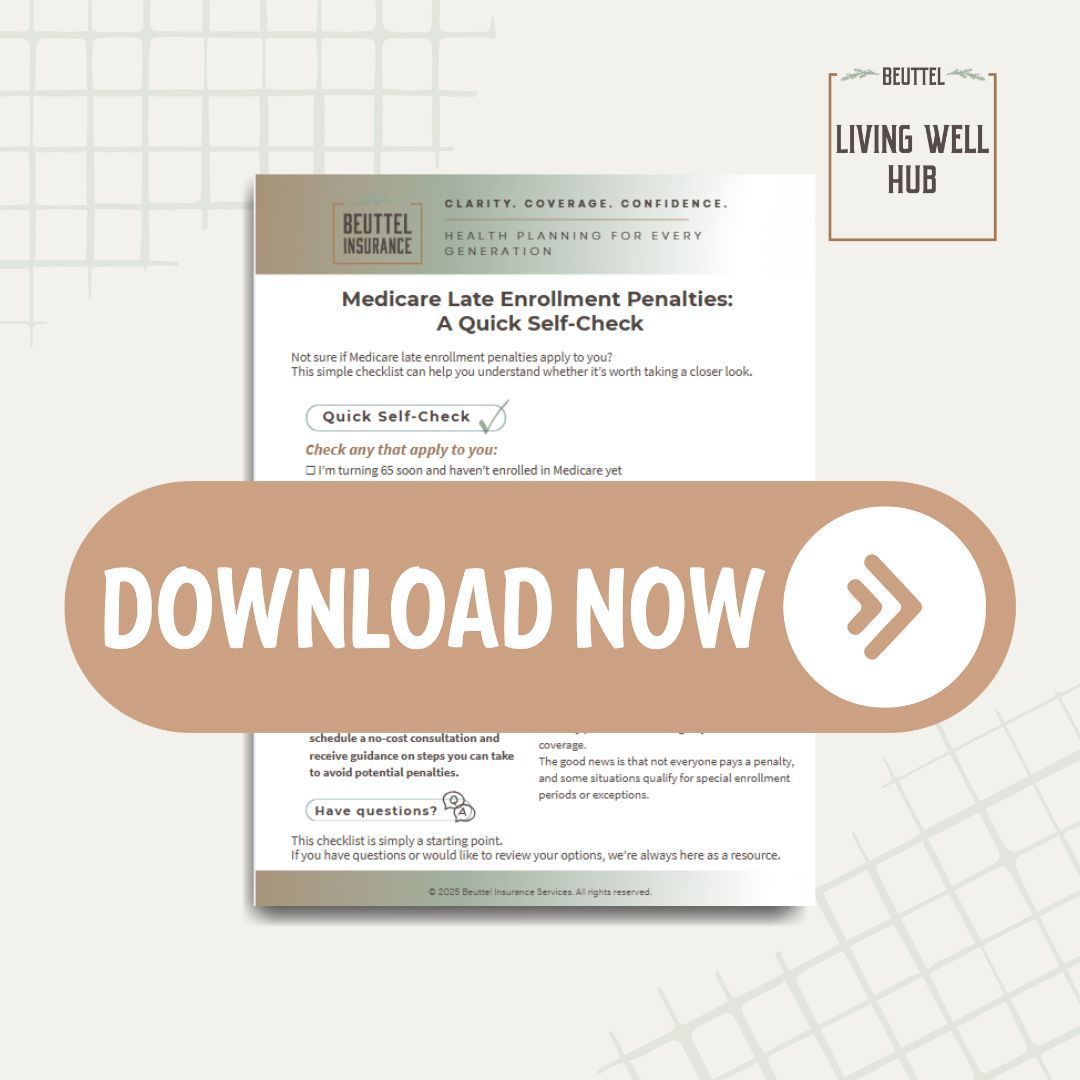
Visit our Resources page and download our 

Medicare Late Enrollment Penalties: A Quick Self-Check Guide.


If you are unsure, and still have questions, schedule with us, or contact our office to get the expert guidance you need to help you avoid penalties.

My Final Thoughts...

Medicare decisions don’t have to feel overwhelming. Knowing when enrollment timing matters — and when to ask questions — helps prevent surprises down the road.

If you’re unsure about your timing, a quick review can bring clarity and peace of mind.

Staying informed is an important part of living well, and we’re here to help guide you along the way.


We look forward to supporting you through your next transition with clarity and confidence.

Older man with glasses writing in a notebook at a table next to a tablet
October 30, 2026
Preparing for Medicare Annual Enrollment? Explore 7 important questions about costs, doctors, prescriptions, and coverage options for 2027.
Woman showing an older woman health insurance plans on a laptop at a kitchen table
October 30, 2026
Helping a parent or loved one with Medicare Annual Enrollment? Discover 5 tips for reviewing coverage, comparing plans, and preparing for 2027.
Medicare brochure cover with a woman reading paperwork beside the text “What to Do When Your Medicare Advantage Plan Ends”
October 29, 2026
Some Medicare Advantage plans are ending for 2027. If you got a letter, you have time and choices. Here’s a simple step-by-step guide.
October 2026 Medicare drug plans flyer with yellow pill bottles and coins, announcing changes and what to do this fall
October 27, 2026
See what’s changing with Medicare Part D in 2027, including drug costs, deductibles, and coverage updates, plus steps to take during Open Enrollment.
October 2, 2026
Turning 65? Learn about Medicare enrollment, retirement planning, employer coverage and HSA rules with Beuttel Insurance Services in the Sierra Foothills.
A thumbnail image of the AEP Checklist from Beuttel Insurance
By Elizabeth Beuttel • October 1, 2026
Download this handy checklist to help you through Medicare's Annual Enrollment Period for 2026 coverage.
August 7, 2026
Discover why growing older may be one of life's greatest gifts and learn simple ways to find more joy, purpose, and meaningful connections every day.
July 20, 2026
Paying for health care on a fixed income isn't always easy. Even with Medicare, premiums, deductibles, prescription drug costs, and copays can add up quickly. The good news is that several federal and state programs are available to help eligible Medicare beneficiaries reduce these costs. Unfortunately, many people who qualify never apply. Some don't realize these programs exist, while others assume they earn too much. That assumption could mean missing out on valuable savings. At Beuttel Insurance Services, we believe it's always worth exploring your options. A few minutes of research today could potentially save you hundreds—or even thousands—of dollars each year.
May 22, 2026
May is Mental Health Awareness Month , and it’s a good reminder that taking care of your mind is just as important as taking care of your body—especially as we get older. Here’s something that might surprise you: according to the Centers for Disease Control and Prevention, about 1 in 5 older adults experiences a mental health concern , including depression or anxiety. And yet, many go without support—often simply because they’re not sure what’s available to them. The good news? Medicare does provide meaningful coverage for mental health care , and understanding how it works can open the door to real support when you need it.
April 28, 2026
Planning summer travel? Learn what Medicare covers in the U.S. and abroad, plus tips to help you stay protected and travel with confidence.
Show More